

We can thank pollinators for much of the food we eat. In fact, about 80% of our plants and crops are pollinated by insects. We know our butterflies and moths as pollinators, but did you know that bees and wasps are more efficient and do much of the heavy lifting of pollinating plants, especially food crops?
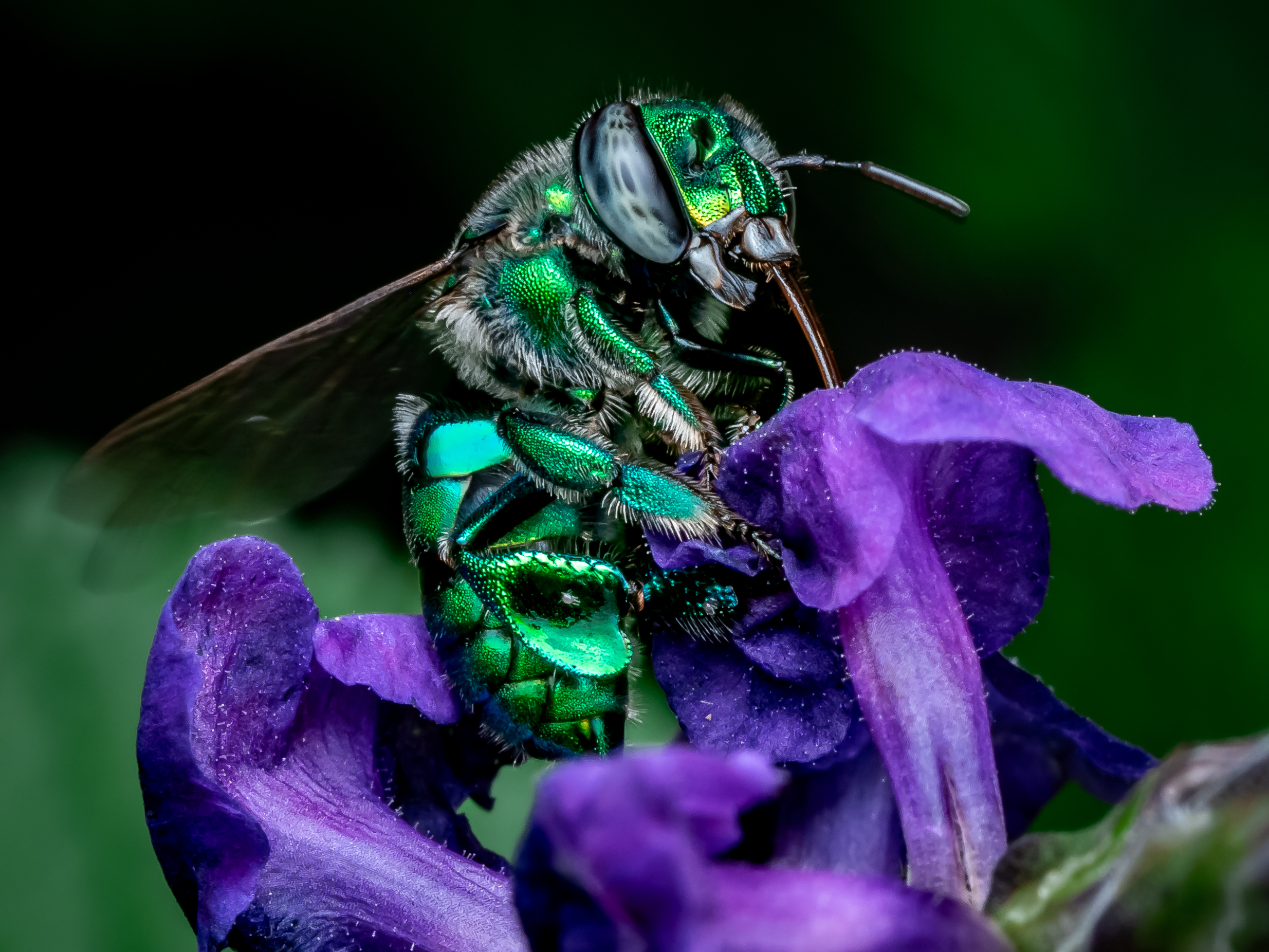
Green orchid bee by Christopher Harrington
Honeybees get a lot of attention and it’s true they are important for pollination. These non-native bees, brought from Europe, are integral to commercial crop production mostly because they are portable by trucking their hives over long distances to work specific crops. But our native bees are better pollinators and even help control some harmful insects.
Florida has over 300 species of native bees! Bumblebees, sweat bees, mason bees, and others all play a valuable role in the life cycle of plants and crops in local areas. Crops like blueberries, pumpkins, and squash, along with most of the flowering plants in the wild and in gardens need pollen carried by native bees.
Healthy ecosystems depend on native bees. From birds to bears, the diet of native wildlife depends on plants that produce fruit, nuts, berries, seeds and roots, which are pollinated by native bees. These bees evolved with native plants and are adapted to work with them. Some bees even match the bloom time of specific flowering plants by timing when they emerge from nests as adults.
Can you tell fact from fiction about these incredible insects?
Take our Bee Pop Quiz and see!
Take Action to Help Bees Thrive:
- Plant native wildflowers, like goldenrods and asters, that support large numbers of native bee species
- Use native grasses, like Muhly grass or wiregrass, that provide nesting places and shelter for bumble bees
- Add areas of native ground cover, wildflower beds, or trees (or all 3!)
- Leave small patches of soil not planted or mulched
- Leave hollow stems of plants in winter
- Use fallen branches or logs to line your garden or make a brush pile
- Don’t use pesticides which can harm native bees
To learn more about making your yard or garden more beneficial for Florida wildlife, check out our gardening for wildlife tips.
Florida Wildflower Foundation and NE Florida’s Native Bees are good sources for more information about attracting bees with native wildflowers.


